
Sustainability and animal welfare in modern poultry production
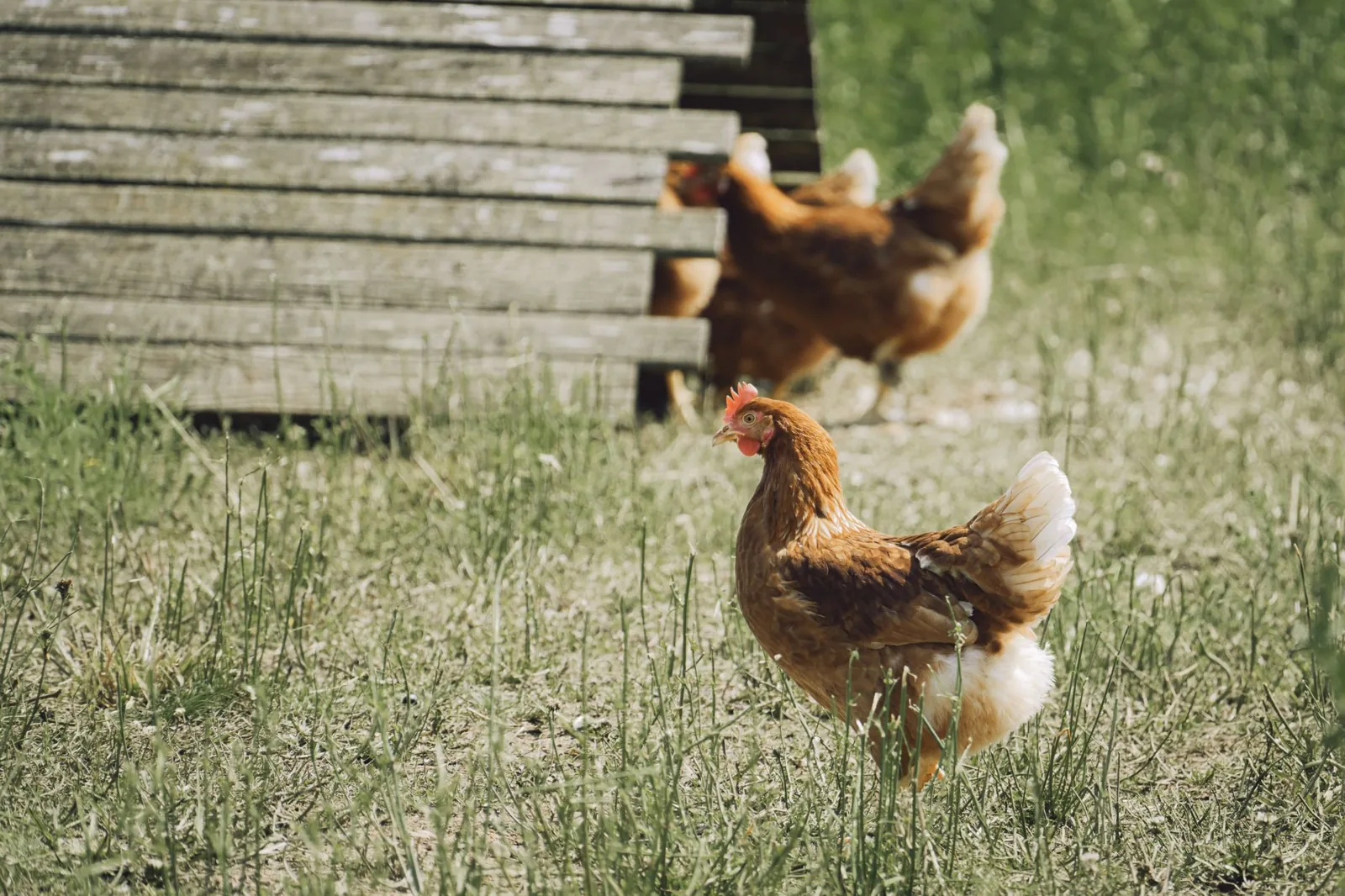
Bird welfare and sustainability are sometimes framed as an extra burden on the producer, but in truth they sit at the heart of good production. A bird raised in a clean, comfortable, low-stress environment grows healthier and converts its feed more efficiently — which in turn reduces waste and the environmental footprint of every kilogram of meat. This lesson explains what bird welfare means in practice inside a modern poultry farm, how it is measured, and why chicken ranks among the most sustainable sources of animal protein — with a look at the Saudi context.
The Five Freedoms: the basis of welfare#
The best-known reference in farm-animal welfare is the Five Freedoms framework, formulated by the UK Farm Animal Welfare Council in 1979, building on the government's 1965 Brambell Report. It sums up what every farmed animal deserves:
- Freedom from hunger and thirst: clean water and a balanced diet that maintain health and vigour.
- Freedom from discomfort: a suitable environment, including shelter and a comfortable resting area.
- Freedom from pain, injury and disease: prevention, diagnosis and prompt treatment.
- Freedom to express normal behaviour: enough space and facilities to allow natural behaviour.
- Freedom from fear and distress: conditions and handling that avoid mental suffering.
Laws and quality-assurance schemes worldwide adopted this framework, and countries such as New Zealand later developed it into the Five Domains model, which adds a clearer focus on the bird's mental state, not just its physical health.
What welfare means in practice on the farm#
These principles turn into concrete daily detail in the grow-out house. The broiler welfare guidelines of the U.S. National Chicken Council show how welfare is translated into measurable, auditable practices:
- Stocking density: the number of birds per area must not exceed a set limit (the Council caps it at 8.5 pounds of live weight per square foot) so every bird can reach water and feed and express its behaviour.
- Lighting: a programme that provides at least four hours of darkness in every twenty-four, designed with a veterinarian or welfare specialist.
- Litter: dry, friable floor litter (loosely compacted at most when squeezed by hand) to protect footpad integrity and limit ammonia gas.
- Ventilation and air quality: control of temperature, humidity and ammonia keeps birds comfortable and their respiratory systems healthy.
- Health and biosecurity: vaccination programmes, veterinary oversight and biosecurity measures protect the flock from disease.
- Handling, transport and slaughter: minimising stress during catching and transport, and ensuring insensibility at slaughter.
Welfare is not a slogan but measured indicators: auditors focus on key welfare indicators such as the bird's ability to move and walk, freedom of the legs and wings from injury, and insensibility at slaughter. Footpad condition is a practical example; wet litter causes visible lesions that reveal a management problem before it worsens.
Welfare standards and schemes#
The National Chicken Council guidelines are audited by accredited bodies and form common ground across the industry. Alongside them, stricter schemes and commitments have emerged — such as the European Chicken Commitment — calling for lower density, natural light, environmental enrichment like perches and pecking objects, and slower-growing breeds that reduce leg problems. Nor should we forget that halal slaughter itself carries genuine welfare requirements: calm handling of the bird, a very sharp knife, and a swift cut that minimises pain — points we covered in the halal chicken lesson. In Saudi Arabia, the Ministry of Environment, Water and Agriculture regulates animal resources, and Gulf standards set requirements for bird welfare and slaughter.
Why chicken is one of the most efficient proteins#
Moving from the bird's welfare to its environmental impact, chicken shows a striking advantage: it is one of the most resource-efficient land meats. The core reason is feed-conversion efficiency; modern broiler breeds convert roughly 1.6 to 1.9 kilograms of feed into one kilogram of live weight, a far better ratio than cattle. That efficiency carries through to the footprint:
- Carbon emissions: the broad global analysis by Poore and Nemecek (2018) puts poultry meat at about 9.9 kilograms of CO2-equivalent per kilogram on average, against roughly 60 for beef.
- Water footprint: chicken's water footprint is about 4,300 litres per kilogram versus roughly 15,400 for beef, per the Water Footprint Network (Mekonnen and Hoekstra).
- Feed is the root of the footprint: more than ninety percent of that footprint is embedded in feed crops, so every gain in feed efficiency and every reduction in mortality and waste lowers the environmental impact directly.
Because most of the footprint is in the feed, the strongest sustainability lever is not green slogans but the fundamentals: healthy, low-stress birds, lower mortality, better feed conversion, and less waste in the kitchen and in distribution. Good welfare and sustainability here are two sides of the same coin.
Sustainability across the whole chain#
Sustainability does not stop at the farm gate; it runs across the whole chain:
- Waste management: turning poultry litter and manure into organic fertiliser for farmland or into bioenergy, rather than an environmental burden.
- Water stewardship: reuse and efficiency in consumption — critical in arid regions where water scarcity is a real constraint on production.
- Energy: climate-controlled houses with efficient ventilation and cleaner energy sources reduce electricity use per bird.
- Responsible medicine use: no growth hormones in poultry for decades, plus prudent antibiotic use and adherence to withdrawal periods under a One Health approach to protect the drugs' effectiveness.
- Cutting waste: every wasted piece means feed, water and energy spent for nothing; improving yield and reducing kitchen waste is part of sustainability (we covered it in the yield and waste lesson).
The Saudi context#
In the Kingdom this balance takes on a strategic dimension. Vision 2030 is driving a rise in poultry self-sufficiency — from about 68 percent in 2022 toward an 80 percent target — with investment exceeding five billion dollars, according to the Ministry of Environment, Water and Agriculture. In a country facing water scarcity, choosing a protein efficient in feed and water, like chicken, is a logical decision — bearing in mind that much of the feed is imported, so a large share of its water footprint is virtual and lies beyond the border. Integrated local production also shortens the distance between plant and plate, shortening the cold chain and cutting transport and import emissions. Modern facilities in the sector are moving toward precise climate control, smart monitoring of bird health, and cleaner logistics — all of which serve welfare and sustainability together.
Welfare, sustainability and quality go together#
The bottom line is that bird welfare and sustainability are not a luxury added at the expense of quality or cost; they are part of sound production. A healthy, comfortable bird yields better meat with less waste, and a farm efficient in feed, water and energy produces with a smaller environmental footprint. For a Saudi supplier building customer trust, committing to welfare and sustainability standards is both a professional and an ethical benchmark — and it ultimately shows up as a fresher, safer and more clearly sourced plate.