
The healthiest ways to cook chicken
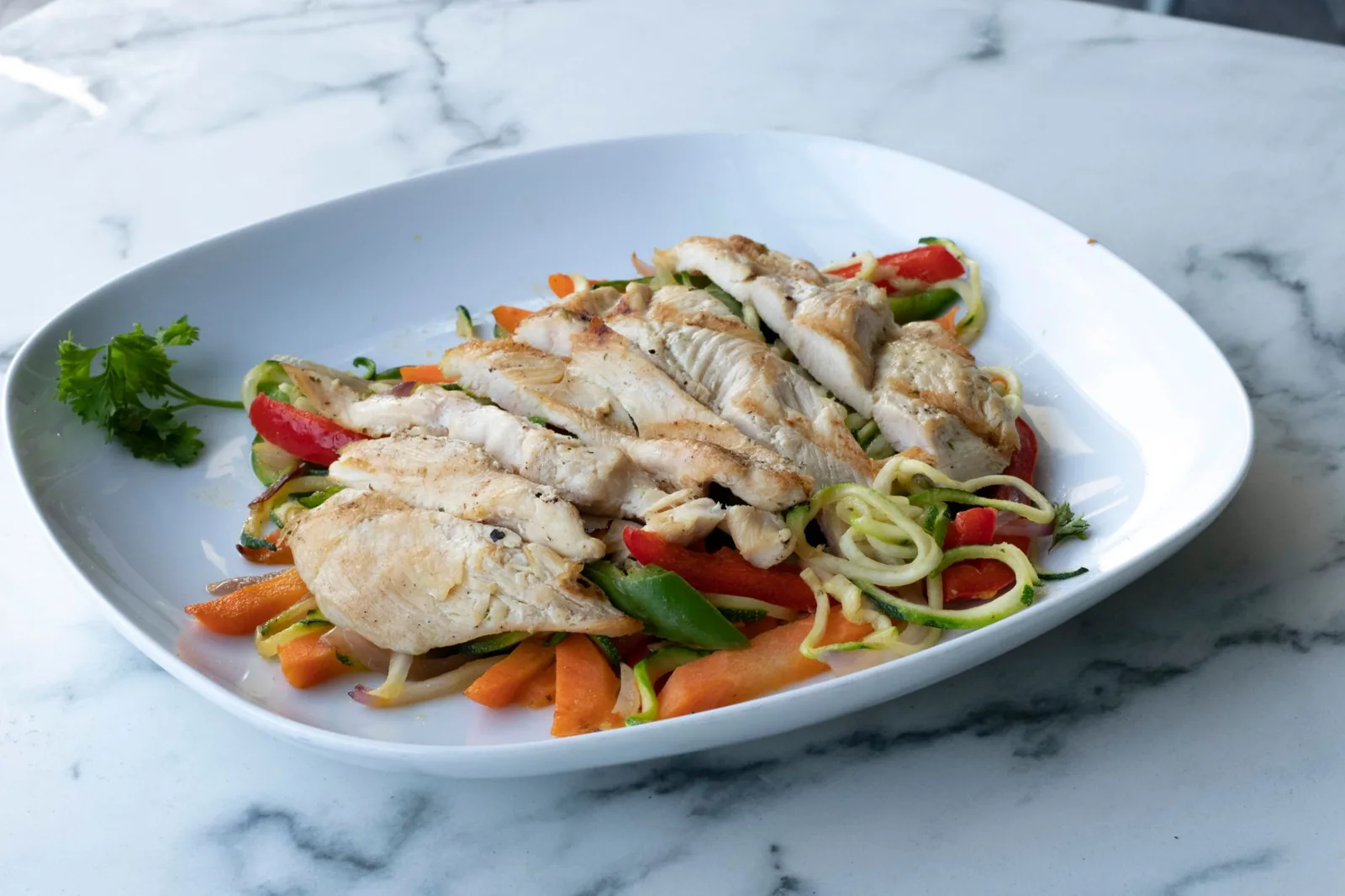
The way you cook chicken can change its healthiness as much as the cut itself does. A single chicken breast can become a light, protein-rich meal or a heavy, fat-laden dish — and the whole difference is in the method: did you add oil? did you leave the skin on? did you push the heat until it charred? This lesson ranks the ways of cooking chicken from healthiest to heaviest, and explains how to keep the benefit and avoid the harmful compounds without losing the taste.
What makes a cooking method healthy?#
Three factors decide how healthy a method is: the amount of fat added during cooking, how much of the nutrients are retained, and whether the high heat generates harmful compounds on the meat's surface. On top of these sits one rule that never changes whatever the method: the chicken must reach a safe internal temperature. The ideal method adds the least fat, cooks at a moderate heat that is enough for safety without burning, and minimises soaking the meat in oil or exposing it to a direct flame.
Cooking methods, from healthiest to heaviest#
- Poaching and steaming: the lightest methods of all — no added fat, and a gentle heat that preserves moisture and nutrients; ideal for shredded chicken in salads and soups.
- Baking and roasting on a rack: lets the fat drain away from the meat with no need for oil, and gives good flavour at a heat you can control.
- Grilling: a low-fat option because the fat drips off, but you must watch the high heat and charring, as we explain below.
- Air frying: gives a crispness close to fried with little or no oil, and is one of the methods the American Heart Association recommends as a lighter alternative to frying.
- Sautéing with a little healthy oil: fine if you control the amount of oil and don't push the heat until it smokes.
- Deep frying and a pan full of oil: the heaviest — it adds a large amount of fat and calories, especially with skin or a breadcrumb coating, and is best kept to occasions rather than a daily routine.
A practical rule from the American Heart Association: choose skinless chicken and trim visible fat, use a rack to drain the fat when baking or roasting, and flavour with herbs, garlic, onion and spices instead of oil and rich sauces.
Beware harmful compounds at very high heat#
When meats — chicken included — are cooked at very high heat, specifically above about 150°C (300°F) as in direct grilling and frying, compounds called heterocyclic amines (HCAs) form. Polycyclic aromatic hydrocarbons (PAHs) also form when the meat's fat drips onto the flame or hot surface, producing smoke that clings to the meat's surface. The US National Cancer Institute explains that these compounds are mutagenic — they can cause changes in DNA — and that studies have linked frequent consumption of well-done grilled or fried meats to some higher risks, although a definitive causal link in humans has not yet been established. The practical meaning is not to stop grilling, but to grill without burning.
- Avoid exposing the meat directly to an open flame or a very hot metal surface, and reduce long cooking times.
- Cook the chicken partly in the oven or microwave first, then finish it on the grill for a short time; this greatly reduces the formation of these amines.
- Turn the meat frequently over high heat instead of leaving it in place.
- Remove any charred or burnt parts before eating.
- Don't use the dripped fat or the drippings-based gravy in a sauce poured over the meat.
Don't sacrifice safety for healthiness#
Some people think leaving chicken "medium" or slightly pink keeps it moister and healthier — and that is a dangerous mistake. Whatever your method, chicken must reach a safe internal temperature of 74°C (165°F) at its deepest point, per the US Department of Agriculture and its food-safety service; bacteria such as Salmonella and Campylobacter only die at that temperature. Healthy cooking and safe cooking are not in conflict: use a meat thermometer to hit the safe temperature precisely, without overcooking that dries the meat and increases charring.
Healthy cooking, the Saudi way#
Saudi cuisine is rich in chicken dishes, and they can be lightened without giving them up. Grilled chicken — mashawi and shish tawook — is a good choice if you marinate it in yoghurt, lemon and spices and grill it without charring. Fried favourites like broasted chicken can get a similar crispness from an air fryer or by baking a breadcrumb coating in the oven with a little oil. For salads and light dishes, poached or steamed then shredded chicken is an excellent protein source with no added fat. The idea is to vary your methods: fried now and then is fine, as long as the daily baseline is lighter.
One last tip: a marinade isn't only for flavour. Soaking chicken in a mix of yoghurt or lemon and herbs before grilling keeps it moist, so you don't need to prolong cooking to the point of charring, and it cuts your need to add oil afterwards.